
The Last Public Editor
In 2017 the New York Times decided social media would be its watchdog. This week we found out what that means.

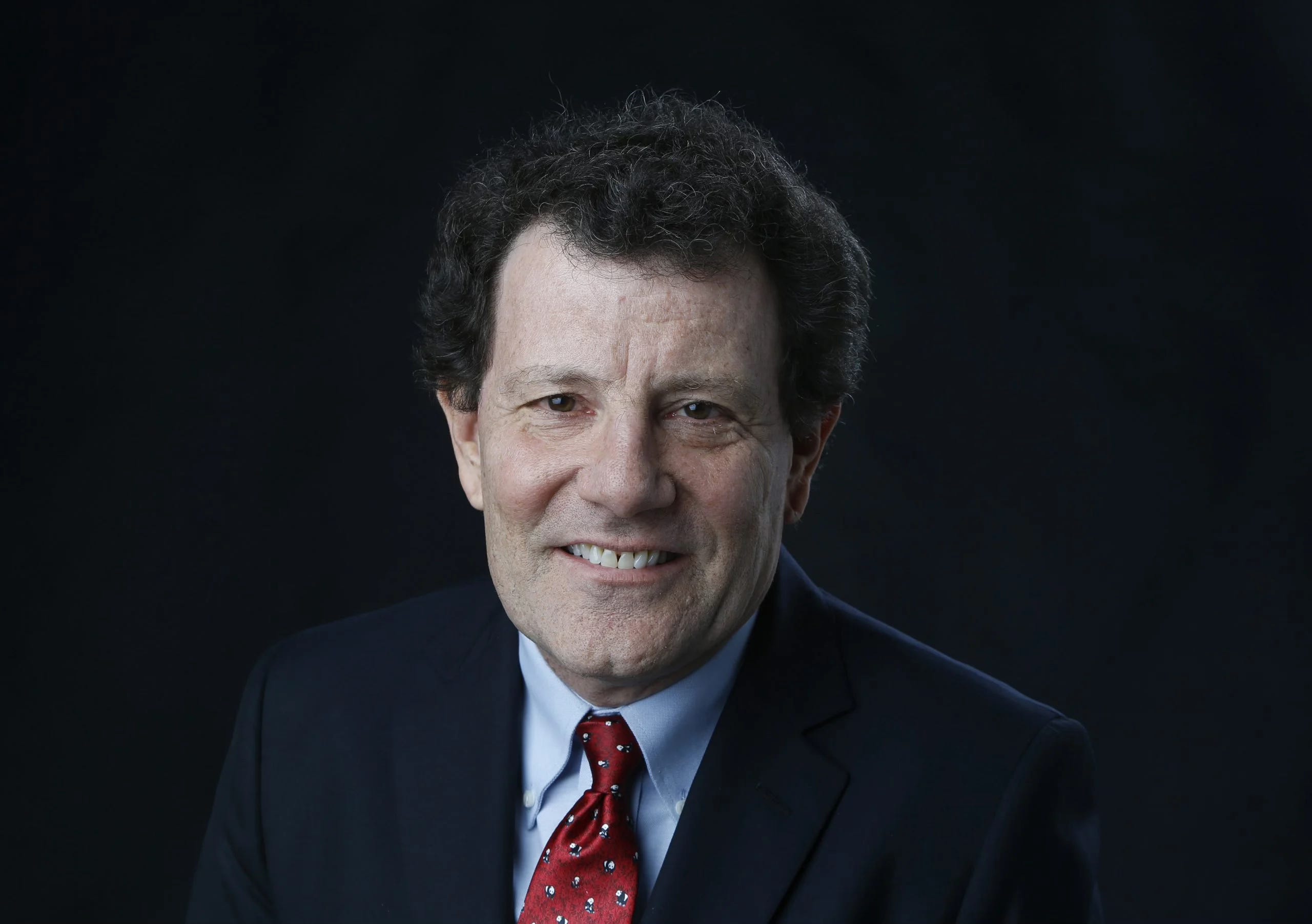
In 2014, the New York Times had a Public Editor. Her name was Margaret Sullivan. When it emerged that Nicholas Kristof had spent years platforming a fabricator named Somaly Mam, Sullivan wrote that Kristof “owes it to his readers to explain, to the best of his ability and at length, what happened and why.” Kristof did. He wrote a column titled “When Sources May Have Lied.” Editor’s notes were added to old work. The mechanism worked.
In 2017, the Times eliminated the Public Editor role. Publisher Arthur Sulzberger Jr. announced that “readers and social media followers collectively serve as a modern watchdog.” Liz Spayd was the last to hold the job.
This week, Kristof published a column accusing Israel’s security forces of systematic sexual violence, sourced from a man who celebrated October 7, an NGO whose chairman was designated by Israel as a Hamas operative in 2013, and a fourteen-person account that grows more lurid each time it migrates to a larger platform. The Times defended the column with a statement from a spokesperson named Charlie Stadtlander, citing Kristof’s two Pulitzers. There is no Margaret Sullivan inside the building anymore. There is only Charlie.
That is the story I want to tell. Not the column. The column has been dissected by a dozen outlets in 36 hours. The story is what the column reveals about the institution that printed it, and about the decision the institution made nine years ago that produced this moment.
Yesterday I wrote about the sources
The piece is The New York Times Has a Source Problem. The short version: two of Kristof’s primary sources are a man who left UCLA after a 17-year-old said he sent her unsolicited photos, and an NGO whose chairman publicly mourned a senior Hamas commander as “our great commander” earlier this year. The same NGO has officially called Hamas’s sexual violence on October 7 a “propaganda tool.” Its board chair endorsed 9/11 inside-job conspiracies.
I asked yesterday how the Times missed any of this when two Google searches would have surfaced all of it.
Today I want to ask why nobody inside the paper is allowed to ask that question on the record.
The Mam parallel
Kristof has been here before.
Somaly Mam was a Cambodian woman who became globally famous on the strength of a story she told about her own childhood in sex slavery, and on the strength of the brothel rescues she said she conducted. Kristof made her career. He called her a “hero” in column after column. He live-tweeted her brothel raids to over a million followers. He featured her in his documentary Half the Sky.
In 2014, Newsweek published a piece by Simon Marks showing that Mam had auditioned girls to lie on camera. Her own backstory was fabricated. The “rescues” were sometimes police raids that generated headlines more than they helped victims. Mam resigned. The Washington Post’s Erik Wemple called for Kristof to audit his entire Cambodia archive. Kristof wrote that he wished he had never written about her, said he had been “hoodwinked,” and added editor’s notes to old columns.
His response when Margaret Sullivan and Erik Wemple pressed him was telling. He said it was hard to verify facts in Cambodia. He said he was “reluctant to be an arbiter” of Mam’s backstory. He said he didn’t know what to think.
This week, asked whether Palestinians might fabricate accusations to defame Israel, Kristof wrote that “to me that seems far-fetched.” That is the same credulity, twelve years older, applied to a higher-stakes accusation on a larger platform.
The Times has watched this reporter make this mistake before. In 2014 there was an internal voice with the authority to push him to answer for it. There is no such voice now.
Shifting stories
The pattern that broke Somaly Mam was that the details grew with the platform. Each new outlet got a more dramatic version. The same pattern is in this column, and it is documentable on the two named sources.
Issa Amro's account, as published in the Washington Post in February 2024 and in the Times in May 2026, contradicts itself between those outlets. In February 2024, the Washington Post reported he was threatened with sexual assault during a ten-hour detention. In May 2026, the Times reported the threat as the act.
Worth noting what else the Times left out about Amro. He has EU and UN human rights awards and a Human Rights Watch fellowship, and the column names them. He was also convicted in Israeli military court in 2021 of six counts, including assault, with a three-month suspended sentence and two years’ probation. The column does not name those. Both are true. The paper printed one and omitted the other. That is an editorial choice, and it tells you which version of Amro the editors wanted the reader to meet.
Sami al-Sai gave testimony about his prison detention to the Israeli human rights group B’Tselem about a year before Kristof’s column. Some details lined up. Al-Sai told B’Tselem that prison guards inserted an object into his anus, causing bleeding. Other details appeared only in the Times account: the object identified as a carrot, a female guard grabbing his genitals, the vomit and blood and broken teeth on his skin from previous detainees. It makes sense for survivors of deeply traumatic experiences to recover and recount details in different ways across years and across interviewers. What gives me pause is the reporter. Kristof has a documented history of not pushing back when the details around him keep escalating. That is the failure mode that collapsed his Cambodia work in 2014. The institution that caught it then no longer exists to catch it now.
The verification stack
American prisons logged more than sixteen thousand complaints of sexual abuse by guards in 2020. Only a small fraction were substantiated on investigation. The Times does not publish columns declaring the American prison system to operate sexual torture as standard operating procedure. No reporter there does. The verification stack for that kind of claim, applied to an American institution, requires named perpetrators, medical records, court filings, contemporaneous documentation, named victims willing to be named, or some combination.
Consider how the Kristof column handles a single allegation. A Palestinian woman is described as raped by Israelis. No witness. No complaint. No medical evidence. No prison name. No charge. No date. There is no journalistic content in that account that would permit an investigation, a defense, or a correction. There is only the accusation, and the request that the reader believe it.
That is the standard a Times opinion column applied to a sovereign state’s security forces. The same paper applies a different standard to the country it operates in. There is no longer anyone inside the building whose job it is to flag the asymmetry.
What I am not saying
I am not saying no Israeli has ever sexually abused a Palestinian prisoner. Cases have been investigated. Reservist guards were arrested last year for the alleged sexual abuse of a Gazan detainee at Sde Teiman. The charges were dropped earlier this year, which is itself an accountability problem in Israel. It is not the accountability problem Kristof reported.
I am not denying that dogs may have been used in ways detainees reasonably described as sexual violence. If guards are using dogs for invasive, repetitive searches of people already in custody, and the detainees experience that as sexual violation, that is torture regardless of the specific physical act. Survivors get to name their own experience. Anyone who accepted Amit Sousanna’s testimony about her captivity in Gaza without demanding she narrate the physical acts cannot turn around and police what Palestinian witnesses call rape. That is the standard or it is no standard at all.
What I am saying is that Kristof’s column does not advance accountability for any real case. It poisons it.
When you blend documented prosecutions with anonymous testimony from a man who celebrated October 7, sourced through an NGO run by an Israeli-designated Hamas operative, decorated with details that escalated between outlets, you have not exposed Israeli wrongdoing. You have given every defender of Israel a reason to dismiss the harder claims along with the easy ones. The victims of real abuse, if there are real victims here, are the ones who lose. Their accounts will now sit alongside the impossible ones in every reader’s mind.
That is the practical cost of what the Times printed Monday.
The defense
This afternoon a Times spokesman released a statement defending Kristof. The operative line:
“There is no truth to this at all. Nicholas Kristof is a two-time Pulitzer Prize-winning journalist who has reported on sexual violence for decades.”
The fuller statement credits Kristof for traveling to the region and says his article collects accounts in the victims’ own words, backed by “independent studies.” It does not name the studies.
Read it twice if you need to. Notice what it does not say. It does not address Euro-Med’s Hamas affiliation. It does not address Sami al-Sai’s October 8 Facebook post celebrating the massacre. It does not address Amro’s shifting account between the Washington Post and the Times. It does not address the absence of corroborating evidence in the column’s most explosive cases. It does not say what the “independent studies” are.
It says Kristof has Pulitzers and the Times stands behind him.
In 2014, the same paper produced a Public Editor’s column titled “When Mr. Kristof’s Sources Are Questioned” and an internal reckoning. In 2026, the same paper produces a press release.
Deborah Lipstadt, until recently the United States Special Envoy to Monitor and Combat Antisemitism, asked the Times publicly whether it had any sense of decency. Lipstadt is the world’s leading historian of Holocaust denial. She knows what a blood libel looks like. When she names one out loud, the line has been crossed.
The other story
On the same Monday, the same paper published an investigation titled “How Israel Turned Eurovision’s Stage Into a Soft Power Tool.” The headline number was one million dollars in Israeli government spending, accumulated over years of contests across an entire continent. A single thirty-second Super Bowl ad costs seven million. The Times portrayed a budget smaller than one American television commercial as a coordinated influence operation.
Buried in the text: no evidence of bots or covert manipulation. Eurovision’s director quoted saying the outcome was true and fair. No rules broken. The headline framed it as a successful soft-power operation anyway. Within twenty-four hours, the Times softened the headline.
Two stories on one Monday. Both admit, in the text, that they have no evidence for the accusation in the headline. Both publish the accusation anyway. One survived the day with a quiet headline edit. The other got a statement defending its author’s Pulitzers.
This is not coincidence. It is a pattern, and the pattern has a name.
Two documents
Two documents on sexual violence in this conflict were published in the last twenty-four hours.
One is a three-hundred-page evidentiary record built over two years. More than four hundred and thirty interviews. More than ten thousand photographs and video segments. Eighteen hundred hours of visual analysis. Victims mapped across fifty-two nationalities. Led by Dr. Cochav Elkayam-Levy, a 2024 Israel Prize laureate and expert in international law, with the Hon. Irwin Cotler as principal contributor and David Crane, founding chief prosecutor of the UN Special Court for Sierra Leone, among the distinguished contributors. Endorsed by Aharon Barak, former president of Israel’s Supreme Court, by Alice Wairimu Nderitu, former UN Under-Secretary-General and Special Adviser on the Prevention of Genocide, and by Mukesh Kapila, former Special Adviser to the UN High Commissioner for Human Rights, among others. Designed for international tribunals.
The other is the Kristof column.
One of these will be cited in court filings, in academic literature, in international tribunals. The other will be remembered, if it is remembered at all, as a press controversy.
The New York Times spent the day before Silenced No More dropped burying one with the other.
Hela
My grandmother Hela left Iraq because she watched what happens to Jews when the dominant cultural authority decides Jews are the kind of people about whom anything can be said. She was not a public figure and did not have a paper of record on her side. She had a small life in Baghdad that became impossible because the air around her filled with stories about what Jews do, and about what Jews are.
Those stories had a shape. They were depraved and sexual, and they involved children or captives. The victims in the stories were always the people who, in the actual political situation, were the aggressors. The accusations were unfalsifiable because they belonged to the realm of the unspeakable, where respectable people do not want to look.
The Kristof column has that shape in 2026 form. The Times printed it. The Times defended it today.
I am not arguing that Nicholas Kristof is an antisemite or that the New York Times has decided to harm Jews. I am arguing something more dangerous because it is more boring. The editorial standards of the world’s most important paper have drifted, and the institution dismantled the internal voice that used to flag the drift. The defense statement issued today is what accountability looks like in a building where Margaret Sullivan no longer exists.
When my grandmother’s neighbors decided Jews could be accused of anything, they did not know they had decided it. They thought they were reading the news.
What now
The Times will probably not retract, but the conversation has started. Longtime contacts of media reporter David Shuster told him this afternoon there are discussions up the masthead. We will see.
What moves the needle is the accumulated record. The Somaly Mam parallel. The shifting Amro and al-Sai accounts. The verification asymmetry between American prisons and Israeli ones. The headline change on the Eurovision piece. The Silenced No More report. Lipstadt’s question. Yesterday’s piece and this one. Every citation builds the file.
That file is what real accountability requires. The Times made that file harder to build in 2017, and we are watching what that decision produced.
If you subscribe to the New York Times, you are paying for this. You should know what you are paying for.
Unbelievable journalism by NYT this week. And by "unbelievable," I mean terrible! And by "this week," I mean it's only Tuesday!
NYTimes has become a systemic, endemic pariah of international journalism. It has a responsibility to its readers to disseminate substantiated sources and op-ed contributors that bear up to academic scrutiny, as opposed to quacks spreading misinformation and vile gossip. Unfortunately, once the headlines hit the press and social media, truth is irrelevant. “What’s done is done and cannot be undone”. Hard to get that “damned spot” off The Times reputation.