
A Jew Gets Into A Muslim Taxi in London
What a Palestinian cab driver taught me about living together.

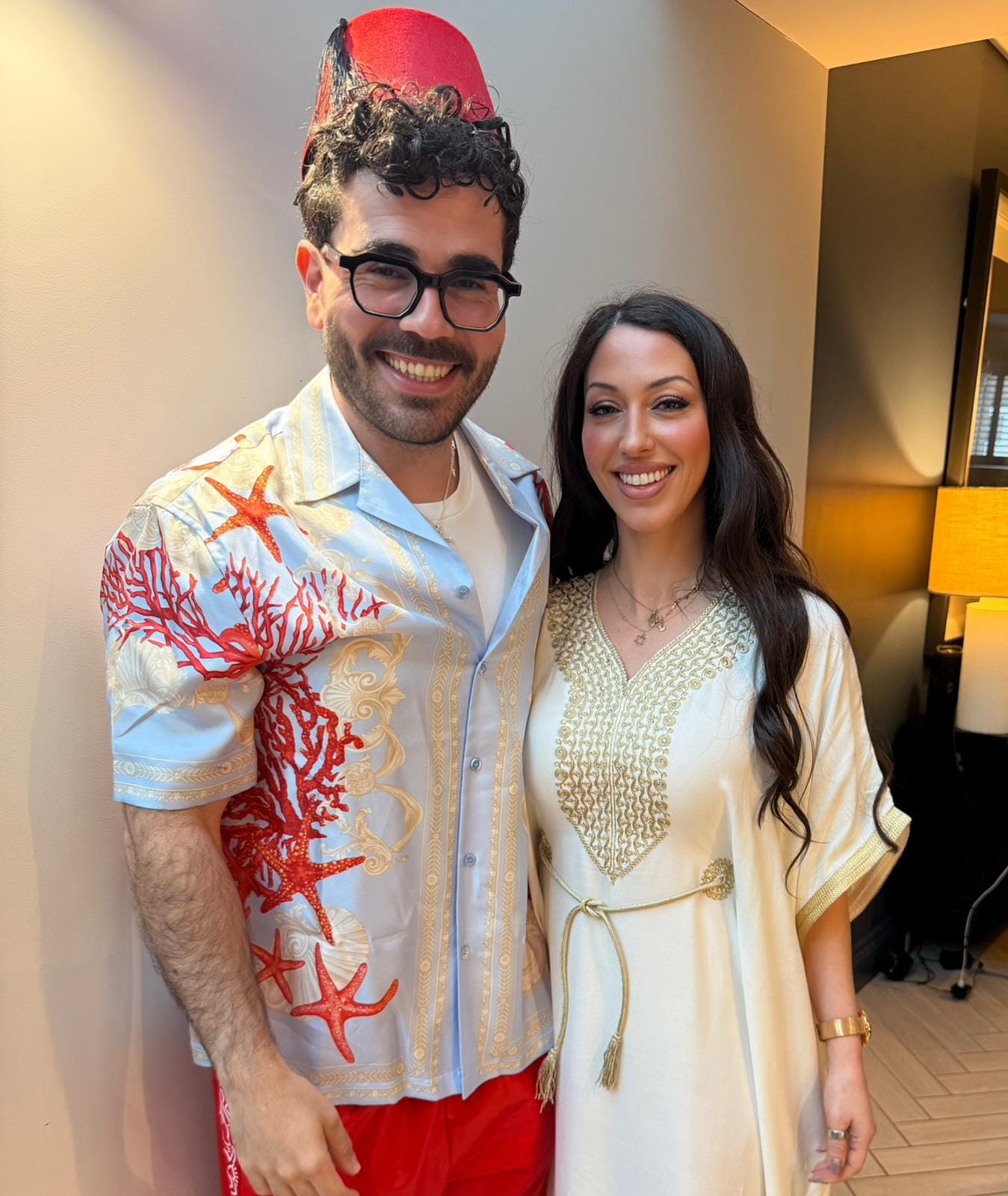
Last night I came home from a Mimouna party in south London.
For those who don’t know, Mimouna is a Moroccan Jewish tradition celebrated the night after Passover ends. You open your doors. You put out honey and fresh-baked goods. You invite everyone in. It is one of the most generous rituals I know. My Moroccan Jewish friends in London do it properly.
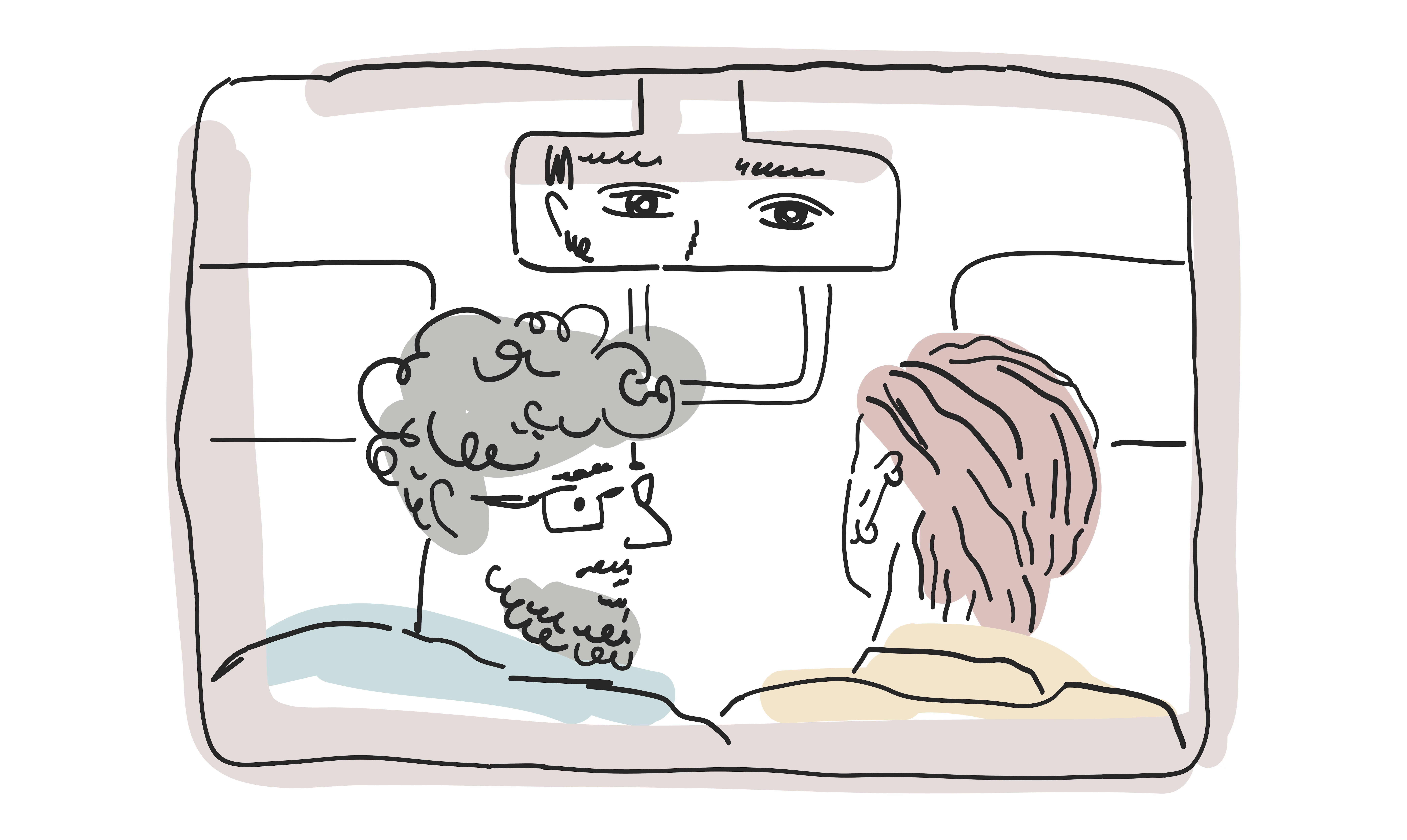
Then, after a long period of Jewish goodbyes, it was time to call a cab home. Ibrahim picked us up in a black cab. He asked, “Henry?” That is the name I gave myself in the app. “Yes!” we all got in.
In London, black cab drivers are different. They’ve done The Knowledge, years of memorizing every street, shortcut, and backroad in the city. You trust them in a way you don’t trust just any driver on the Uber app.
There were four of us in the back. My husband Marc, our two Jewish friends, and me. Marc started talking about how he grew up longing to have a pet pigeon. One of those conversations that starts small and goes nowhere in particular, which is exactly the kind of conversation you want at the end of a night like that.
Then the speaker crackled on.
“Oh, when I lived in Jordan, I had many birds!”
Ibrahim had been listening the whole time and decided he was part of the conversation now. And just like that, he was. He told us jokes. He told us about his British wife. He told us about his son Khalil and how much he loves animals. He said the Prophet Muhammad had told Muslims not to keep dogs in the home, so they don’t keep dogs.
I smiled. You never know how a London cab ride is going to go.
I thought about my Moroccan Jewish friend’s great-grandparents, chatting with their Arab neighbors over the Mimouna feast. Did they also talk about their pets?
———
I am an Iraqi-Tunisian Jewish man. My Iraqi grandmother raised me to speak Arabic and understand Iraqi hospitality and warmth. I slipped between registers without thinking about it. I said “mashallah.” I called him brother. I didn’t bring up Israel, though I suspected he had already figured it out.
Then we pulled up to our building.
Ibrahim said, “Do you want to hear a Jewish joke?”
I stopped. Marc’s face went very still. One of those silences that lasts less than a second and contains a lot.
Ibrahim added quickly: “You’re both Jewish, yes?”
I said, “Yes, I am.”
He said he had figured it out earlier when he heard us mention Israel. I told him yes, I’m Israeli, and that my mother is from Iraq, which is why my Arabic sounds the way it does.
“Oh!” He grew animated. “I love Iraqi Jews. When I visited Israel, I stayed in Petach Tikva with my Iraqi Jewish friends. Wonderful people. Wonderful.” We both exhaled.
Ibrahim said he believed it was only under certain Sunni political pressures that Iraqi Jews had faced real hardship. I decided not to get into the subject. He asked me how I spoke the dialect so well. I told him that Arabic was the only language my grandmother knew.
He nodded.
Then he said, “I am Palestinian. I want to live in peace with everyone on this land. My grandmother lived in Haifa. She said she loved her Jewish neighbors there. Until she had to leave when the war started. Just like your grandparents had to leave.”
I didn’t know what to say, so I just sat with it for a moment.
Two grandmothers. Two languages only spoken at home now, carried by grandchildren who learned them in kitchens. Two families that got pushed off the land they knew, in the same decade, in the same storm, for reasons neither of them chose and neither of them fully understood.
——-
And here we both were. In London. In Britain. The country that issued the Balfour Declaration and then blocked Jewish refugees from entering our ancient homeland, while the Nazi ovens burned. The country that ran the British Mandate and then walked away from the mess it made. The country that made promises it had no intention of keeping, on a land it had no real right to promise. A country that, to this day, allows hatred of Jews to go unchecked.
Ibrahim’s grandmother lost her home as Israel defended itself from Arab armies that invaded the moment the British left. My grandparents fled Iraq after the horrific violence of the Farhud, when Arab neighbors brutally attacked Baghdad’s Jews. Though the War of 1948 and the Farhud of 1941 were both ultimately sparked by Arab violence against Jews, the messy legacy of British colonialism played a role in creating the conditions for both. And here we were, chatting on a London sidewalk after Mimouna.
Ibrahim told us his Jewish joke. I don’t even remember what it was. I was still thinking about Haifa.
We said goodnight. He drove away.
—-
I have spent years trying to explain something that most people do not want to hear: that the story of this conflict is not a clean story with villains on one side and victims on the other.
That Jewish displacement from Arab lands and Palestinian displacement from their homes are not competing tragedies to be ranked. They are one connected story of a region in the throes of colonialism, Nazism, and the upheaval of World War II.
That the people who actually lived through these things, the grandmothers and the grandfathers, often understand this better than the activists with flags.
It reminded me of the recently made-up identity “Arab Jew,” usually deployed by people who have never had to flee anywhere, to blur Jewish indigenous connection to the land until it disappears. My grandmother was not an Arab. She was a Jewish woman who lived in an Arab country, who spoke Arabic because that was the language of the place she was born, who carried her prayers and her Shabbat candles across borders that should never have been forced to cross. Not the same thing.
But we did live together. Jews and Arabs, for centuries, across Iraq, Tunisia, Morocco, and Haifa. Not in equality, not without violence, not without hierarchy. I won’t romanticize it. But we knew each other’s names. Sometimes we knew each other’s grandmothers.
Ibrahim knew mine, in a sense.
We can live together again. But equal this time. Not a tolerance extended from one group to another. Something real.
Ibrahim understood it. He said it himself, in a black cab in South London, at midnight, after a Mimouna, without anyone asking him to.
I didn’t need to code-switch. I just didn’t know that yet.
There is a stark contrast between historical narratives and reality. Your grandmother was forced out of Baghdad under the threat of slaughter; meanwhile, Ibrahim’s grandmother was instructed to leave Haifa to clear the way for Arab armies, who intended to eliminate the Jewish population of the nascent State of Israel.
This distortion of history reminds me of the rhetoric a former Egyptian friend used to repeat in college—claiming that Egypt had won every war against Israel and that Israel only sought peace in 1978 out of defeat.
Thanks for sharing