
The Exceptional Jews
Hannah Arendt had a name for this arrangement between anti-Zionist Jews and the world. It did not end well the first time.

After Abdul El-Sayed won his Michigan primary, one of his first orders of business was to reassure the Jews.
“AIPAC and Israel are not the same as Judaism and the Jewish people,” he said. “I love Judaism and I love the Jewish people.” He went further. The Jewish people, he said, are a light unto the world.
I would like to believe him, but his record loudly disagrees. This is a man who has refused to say whether Israel should exist, and whose response to an attack on a Michigan synagogue was a speech about how “hurt people hurt people.” So the love is not unconditional. He loves Judaism, minus the roughly half of world Jewry who live in Israel and the vast majority elsewhere who feel bound to it.
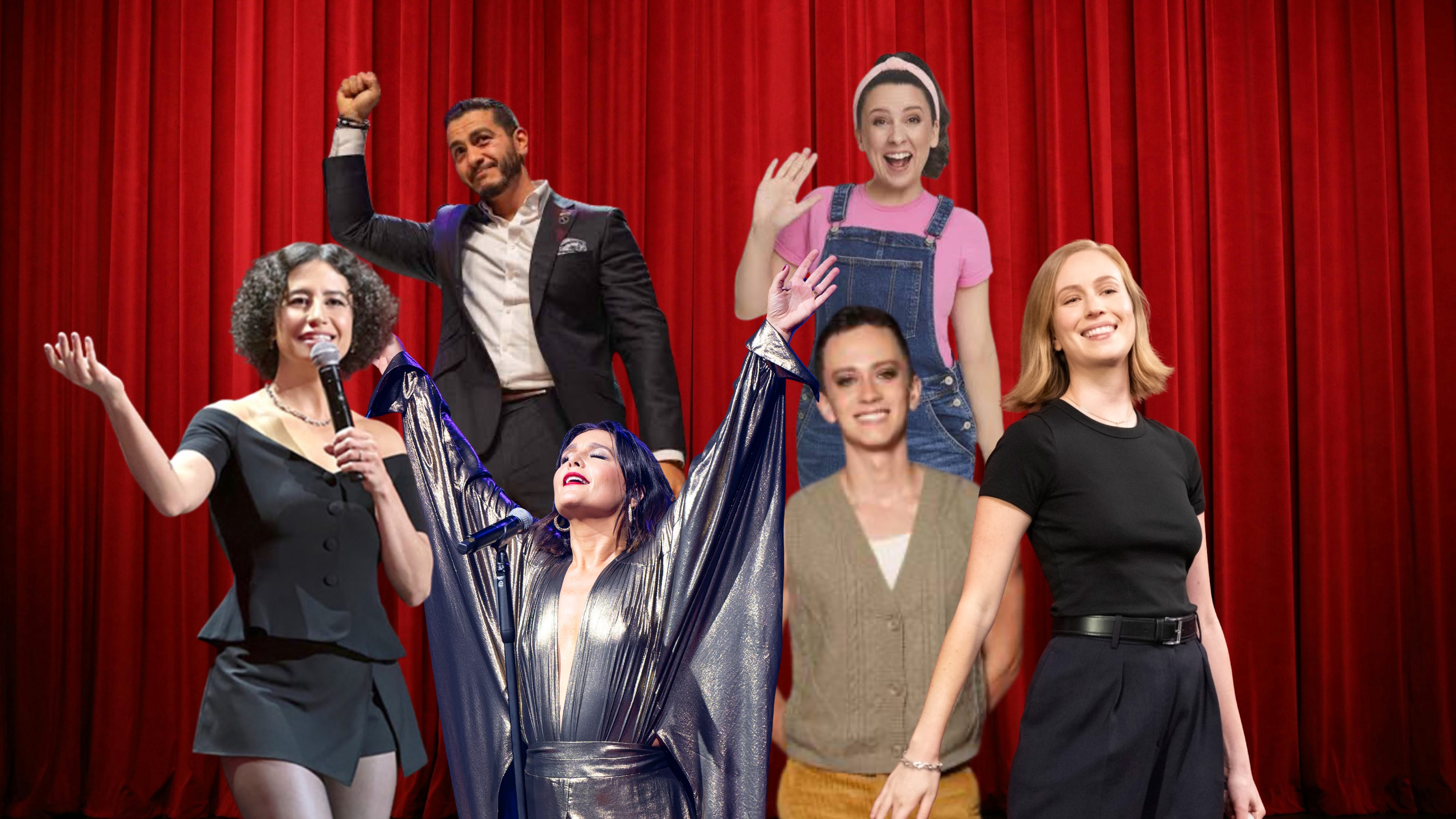
He did not invent this arrangement. When Ms. Rachel, the most trusted children’s entertainer in America, faced a wave of antisemitism accusations over her Gaza posts, she answered through tears with her credentials: We have Jewish family, she said. A lot of my friends are Jewish.
A gentile accused of antisemitism can usually produce a Jew willing to vouch for him. She had her husband’s relatives. El-Sayed loves the good Jews.
Sure, a person can oppose an Israeli government and remain a friend to the Jewish people. I oppose Israel’s current government, and so do many Jews I admire.
But El-Sayed, and others who echo this rhetoric, are not talking about a certain government or policies they disagree with. They are talking about the country where half the world’s Jews live.
When Jewish actress Hannah Einbinder won her Emmy, she closed her speech with “free Palestine.” Pressed on it afterward, she explained herself. “It is my obligation as a Jewish person, to distinguish Jews from the state of Israel.”
Why is it a moral duty for Jews to proactively distinguish ourselves from the only country that gave many of our ancestors, both my grandmothers included, refuge? How can we be obliged to do something that is not actually possible, when you consider the centrality of Israel to our people’s liturgy? Judaism and Israel can’t be conflated, as El-Sayed has noted before. Judaism is an ethno-religion; Israel is where it began, where the civilization it sustained grew up, and where Jews sought sovereignty after thousands of years of persecution culminated in the Nazi genocide against us.
Israel and Judaism cannot be ripped apart either, and any Jew trying it anyway, to gain acceptance by the mob, is promoting a falsehood that gets those of us who can’t pretend away our connection killed.
The separation is meant to signal that bad Jews exist, and that the Jew performing it is nothing like them.
Matt Bernstein, an American Jewish influencer with millions of followers, endorsed El-Sayed. Michigan voters wondering who to choose, he wrote, needed only to look at where Ms. Rachel put her money. She donated $3,000 to El-Sayed.
In London, the singer Jessie Ware gained popularity with the queer community for years. Before October 7th she used to share my educational posts about Jewish identity and Israel. Her beloved podcast with her mother began around the Shabbat dinner table. These days she posts about American Jewish chefs and artists.
Throughout the war, she posted repeatedly against Israel, signing petitions to strip Israel of its ability to defend itself. This year, she performed at an anti-Israel concert in London, while people in her crowd held antisemitic posters aloft. On her platform, Jewishness is abundant. The Jewish state is the one thing that cannot be loved there. Jewish guests keep accepting the invitation anyway.
These are the Jews who get loved. They arrive kosher for gentiles.
Hannah Arendt watched this arrangement destroy a civilization. In The Origins of Totalitarianism she called them exception Jews (Ausnahmejuden).
Nineteenth-century Europe admitted certain Jews, the cultivated and the useful, on the explicit understanding that they stood apart from the Jewish masses.
Arendt described the bargain in one line: to be accepted, a Jew had to be a Jew and yet be unlike other Jews.
She also saw the trap. An exception proves a rule. The Jew who accepts the title of a good Jew has signed a statement that bad Jews exist, that they are the many, and that the suspicion aimed at them is fair. He has endorsed the hatred and negotiated a personal exemption from it. He doesn’t control the terms of the exemption, whether he admits that to himself or not.
A century later, the entry fee has changed and the door has not. Arendt’s exception earned his place through assimilation, through Goethe and good manners and distance from the shtetl. Today’s exception earns it through denunciation. He keeps the Jewishness on display and aims it at the Jews who remain attached to Israel, which is to say most of us. The old exception left his people quietly. The new one makes the leaving his brand. Einbinder calls it an obligation. Arendt would have recognized the terms.
The deal has been tested before, and we know how it ends. The assimilated Jews of Germany believed their exemptions were permanent. They had the war medals and the professorships. Some had baptismal certificates, too. When the mood turned, the society that had granted every exception revoked them together, and the lines those Jews had drawn between themselves and the Ostjuden meant nothing.
Conditional acceptance is a lease, and the tenant never holds the pen. Every Jew who agrees to be the acceptable kind confirms that an unacceptable kind exists, and that the unacceptable kind is most of the Jewish world. The circle of Jews permitted to live in peace gets smaller each time, and the exception stands inside it only until the man at the door redraws it.
So when El-Sayed says he loves the Jewish people, I take him at his word, with one correction. He loves a Jewish people of his own design, small enough to fit on a stage beside him. The rest of us, stubborn and bound to Israel, he has already turned away. A few years ago I wrote a book about being the wrong kind of Jew, and I meant it as memoir. Men like El-Sayed are working to make it a prophecy. The Jews standing beside them should understand that the title has room for everyone, eventually.
Thanks for this column. Of late, I have had to work quite hard to let go of my anger for the many, many anti-Jewish Jews. Edit: my “friends” in Ireland cited many of these people, many of whom are quite famous and outspoken, when they decided to stop speaking to me because I refused to condemn Israel’s actions post-Oct 7.
Well stated as usual- recommend read- Amos Elon’s “ The Pity of it All” - a comprehensive history of German Jewry