
Not My Mandate
How bureaucracy blunts justice at the United Nations

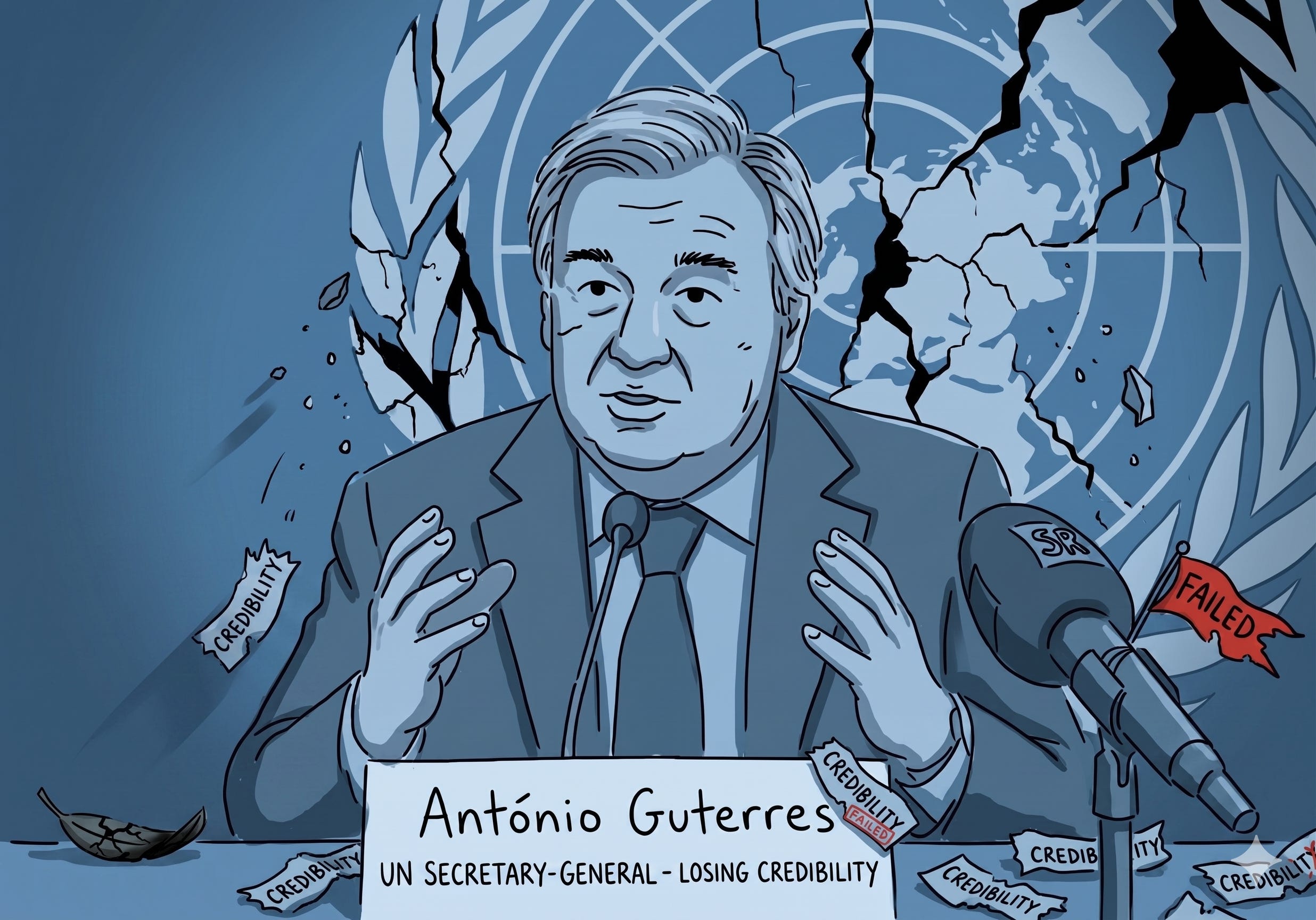
In January 2024, Pramila Patten went to Israel at the government’s invitation. She is the United Nations’ Special Representative on Sexual Violence in Conflict, and she spent more than two weeks on the ground. She walked the Nova festival site. She visited Kibbutz Be’eri. She reviewed forensic material and sat with people who survived October 7 and with the families of those who did not.
She found what the evidence showed. There were reasonable grounds to believe Hamas committed rape and gang rape at several locations that day. In most of the cases her team examined, the women were raped and then killed. In at least two, the bodies were violated after death. On the hostages dragged into Gaza, she reported “clear and convincing information” of rape and sexualized torture.
Then she wrote the sentence that has governed everything since. Her visit, she said, was “neither intended nor mandated to be investigative in nature.” The real work, she explained, belonged to other UN bodies.
She had the survivors. She had the evidence. She had seventeen days. And she closed her report by saying the investigation was someone else’s job.
Why her office exists
To understand why that sentence matters, you have to know why her office exists at all.
In 1993, responding to the rape of Bosnian women as a weapon of war, the UN Security Council created the first international war crimes tribunal since Nuremberg. For the first time, testimony about sexual violence entered the evidentiary record of an international war crimes tribunal. Sixteen years later, in 2009, the Council went further and established a standing office devoted to the problem. Its first Special Representative took up the post in 2010.
The premise was plain. The world had spent too long treating the rape of women in war as background noise, and that habit of looking away was itself a failure an institution could be built to correct. Patten leads that institution. When she handed off the case to which she had been given direct access, she was not bowing to a technicality. She was declining to do the thing the office was created to do. The variable was the victims’ identities.
Who got the case
Patten said the investigation belonged to other UN bodies. It is worth asking who they were.
The case went to the Commission of Inquiry on the Occupied Palestinian Territory, a standing panel of three. Israel refused to cooperate with it, and that refusal has been treated ever since as proof of Israeli obstruction. Israel’s refusal becomes easier to understand once you meet the commissioners.
Miloon Kothari told an interviewer in 2022 that the commission was disheartened by social media “controlled largely by” the “Jewish lobby” or specific NGOs, and asked why Israel was permitted to be a UN member at all. Chris Sidoti, affiliated with a group that campaigns to boycott Israel, complained that some Jews threw accusations of antisemitism around “like rice at a wedding.” The chair, Navi Pillay, who had publicly urged sanctions on Israel before her appointment, dismissed concerns about antisemitism on her own commission as a “diversion” and called them “lies.”
Eighteen governments, the European Union, and Guterres’ own spokesman condemned Kothari’s remarks. Nobody on the commission left. In 2025 the same three concluded that Israel was committing genocide, and only then resigned, together.
These are the investigators to whom the rape and murder of Israeli women was entrusted. Israel’s refusal to open its doors to them is reported as the scandal. The people doing the investigating are reported as background. That approach is backwards.
The commission’s composition begs the question, which evidence would they deem acceptable? For example, Euro-Med Human Rights Monitor, a reputable-sounding Geneva-based organization, turns up wherever Israel is accused, from the genocide case at The Hague to the recent New York Times column on Palestinian prisoners. But behind its neutral name sits Ramy Abdu, Its founder and chairman. He appears on a list from 2013 of Hamas’s main operatives in Europe, and was placed under an Israeli counterterror seizure order in 2020.
Kothari, Sidoti, and Pillay don’t strike me as the kind of investigators who would find that background disqualifying, even though a reasonable person would.
How bureaucracy became a weapon
None of this would sting the same way if it were the first time the UN, under the leadership of António Guterres, had conducted high stakes investigations only to stop short of taking action on the results.
It’s not. Guterres’ term, which ends in December, is marred by this exact pattern: investigate, then wait. In each case, the UN chose to appease influential bad actors rather than actually seek justice.
When Eritrean and Ethiopian forces swept through Tigray, the UN’s own commission of experts documented mass killings, the deliberate starvation of civilians, and rape used as a systematic weapon, including women held in sexual slavery for weeks. It named both armies as responsible for crimes against humanity. Then, on the very day the commission published its final report in October 2023, its mandate was allowed to expire. No member state asked to renew it. The Ethiopian government exerted enormous pressure to stop it. One of its experts, Steven Ratner, called the shutdown a “great blow” to victims. The commission said its survivors had been left “in limbo.”
China’s internment of more than a million Uyghurs produced a quieter kind of failure. Michelle Bachelet, then the UN’s human rights chief, spent years preparing a report on Xinjiang while Beijing lobbied to bury it and a bloc of China-friendly states formally asked her not to publish. Guterres met Xi Jinping on the sidelines of the 2022 Winter Olympics and asked for a credible visit. He got a guided tour. The report, when it finally appeared, concluded that China’s conduct might amount to crimes against humanity. But the UN delayed releasing it until the final minutes of Bachelet’s last day in office.
Before he became Secretary General, Guterres himself slow-balled UN action on the Rohingya genocide until it was too late. He was the UN’s refugee chief in 2012 when Myanmar’s president told him to his face that the Rohingya would never be recognized as citizens. By 2017, the army had driven more than 730,000 of them across the border in a campaign UN investigators judged to carry genocidal intent. Guterres later commissioned an internal review of his own organization’s conduct. It found the UN paralyzed and collectively responsible for failing to act. He accepted the findings. That same year, he became the top official at the UN.
In each case, bureaucracy, whether in the form of expiring mandates or institutional inertia, blocked justice for victims, even when all the fact-finding had been done.
In that context, the next thing Premila Patten did is anything but surprising.
A few months after she returned from Israel, in May 2024, Patten was invited to brief the Security Council at a session organized by the United States, titled “Condemning hostage-taking in Israel on October 7 as a psychological tool of terrorism.” She was listed as the first briefer. Then, according to a UN diplomat who spoke to the Times of Israel, she withdrew. The source confirmed it was not for scheduling reasons. The diplomat described the decision as politically motivated, the result of pressure on her office not to be seen as prioritizing Israeli hostage victims over Palestinians.
Patten’s office issued a statement saying she had “not wavered in her position.” But she did not attend.
The hostages’ families were left to brief the Security Council without the UN’s own Special Representative on Sexual Violence in Conflict in the room.
The blacklist
This week, Israel’s ambassador, Danny Danon, announced that the Israel Prison Service is expected to be added to the UN’s annual blacklist of those responsible for sexual violence in conflict, besides Hamas, ISIS, and what he called “the most depraved terrorist organizations in the world.” It is the first time Israeli bodies have appeared in the report’s history. Hamas was added last August. Israel says it handed the UN documents and detailed rebuttals and invited inspectors to the sites, and was listed anyway. Cooperation, it turns out, did not matter. Israel has now frozen contact with the Secretary-General’s office. Guterres finishes his term on December 31.
I am not for a second denying the fact that Israelis have abused Palestinian detainees. Reservists were arrested last year over the alleged sexual assault of a Gazan prisoner at Sde Teiman, and the charges were later dropped. Credible testimonies of mistreatment in Israeli custody exist.
What I am saying is that these crimes deserve investigators whose conclusions are not written in advance.
And more importantly, what I am saying is that there is a common thread here. That thread is a Secretary General who has spent his career in powerful humanitarian roles appeasing and protecting the world’s worst regimes.
When faced with evidence of impending genocide, he sat on his hands. When China didn’t want their treatment of minorities to come out, he ran down the clock. When Ethiopia wanted the world to look away from its crimes against humanity, he averted his gaze.
And now, when the fact-finding of his own Representative on Sexual Violence in Conflict necessitated putting the Qatar- and Iran-supported Hamas on the blacklist, he found a way to blunt the impact even of that designation. He made sure Israel was added, too.
The next Secretary General must do better
The UN did something of value here. Patten’s mandate produced a document that gave the world clear, sourced evidence of what Hamas did. That document is real. It belongs to the survivors and hostages who testified to create it. The failure is not the report. It is what the institution did with it next.
The survivors of October 7 gave their testimony so the world could never say it did not know. That testimony was deferred, then used as the procedural reason to list their country beside the men who raped them. The Palestinians genuinely abused in Israeli custody deserved better than investigators who had already decided, and a role as pawns in a geopolitical power struggle.
The women of Tigray, who never made any list, who were named by the UN’s own experts and abandoned the day the report landed, deserved a sliver of the energy this Secretary-General has found, even in his final months, to do the bidding of the corrupt human rights abusers that he counts as member states.
Guterres didn’t show up for the survivors. In January, someone else gets the chance to. The testimony is already on the record. So are the failures.
Sources: UN Office of the SRSG-SVC press release and Security Council briefing on the Israel/West Bank mission (March 4 and 11, 2024); Times of Israel and PassBlue coverage of the Patten findings; UN Security Council Resolution 1888 (2009) and OSRSG-SVC founding records; Times of Israel, Jerusalem Post, and UN Watch on the Kothari, Sidoti, and Pillay remarks (2022) and the commissioners’ 2025 resignations; UN News, OHCHR, and Washington Times on the International Commission of Human Rights Experts on Ethiopia and the expiry of its mandate (October 2023); OHCHR and Reuters records on the Bachelet Xinjiang report (August 2022); the Rosenthal review of UN conduct in Myanmar (2019); Jerusalem Post, Times of Israel, Fox News, Al Jazeera, and AP coverage of the 2026 conflict-related sexual violence report and Israel’s response.
These facts are well known and terrifying. Why are we still beholden to the UN? What do they do for us - and for the world “peace” at all? All of them “rapporteurs” don’t do anything for anyone. It’s a deeply rotten body of self important people -they need to be disassembled and thrown into the garbage bin of history
The UN influencers are on the most widespread media sites. And their fans are the enthusiastic followers who buy every product, irrespective of factchecks and shipping rates.